Returning to the Age of Soap: Why Truly Saponified Soap Matters
Not many decades ago, a small stream near almost any Korean village was full of life — crucian carp and loach visible right at the surface, their scales flashing silver as they swam upstream on a rainy day.
At some point, white foam started appearing in that water. Not long after, the fish were gone.
That shift lined up almost exactly with the era when synthetic detergents became a fixture of daily life.
The Ecological Cost of Synthetic Surfactants
Asking people to give up cheap, convenient, skin-friendly-feeling detergents outright isn't realistic.
But reducing how much of them we use is worth taking seriously.
Whether synthetic surfactants pose a direct toxicity risk to the human body is still debated.
Toxicity aside, though, a few facts aren't in dispute: they biodegrade poorly, harm small aquatic organisms, and the foam they generate blankets the water's surface — blocking sunlight and cutting off oxygen exchange.
For the ecosystem of a small stream, that combination is genuinely damaging.
Five Reasons to Return to Soap
1. Lower body burden.
True soap is made from fatty acid salts derived from edible natural oils — coconut, palm, olive — rather than synthetic surfactants, so it poses little risk to the human body.
2. Better biodegradability.
Compared to synthetic surfactants, fatty acid salts are known to biodegrade far more readily, with minimal impact on river and stream ecosystems.
3. No preservatives needed.
As a solid, soap can be stored long-term without preservatives — something liquid cleansers can't claim.
4. No plastic packaging required.
A solid bar doesn't need a sealed plastic or vinyl container the way a liquid product does.
5. A smaller footprint in transport.
Soap is a dense, concentrated product. Compared to liquid cleansers — most of which are mostly water — it's lighter and takes up less volume, which means less fuel burned in distribution and less air pollution, simply because you're not shipping unnecessary water or solvent.
The Plastic Problem Nobody Wants to Own
Plastic waste has become a global concern almost overnight, and per-capita plastic consumption in Korea ranks uncomfortably high.
Switching to bar soap alone could meaningfully cut down on the plastic containers we throw away every day.
Changing an entire convenience-driven lifestyle overnight isn't realistic — but shifting habits one at a time is.
Why Soap Fell Out of Favor in the First Place
Reviving the age of soap means being honest about why consumers turned away from it.
Most soap is alkaline, and that alkalinity is what leaves skin feeling tight or irritated after use.
Until fairly recently, the assumption was simple: soap is inherently alkaline, so a rough, drying feel is just the price of using it.
That assumption is wrong. Soap in which the saponification reaction has actually gone to completion — leaving almost no residual sodium hydroxide — feels remarkably gentle and cleans effectively, without any of that harshness.
In other words, if soap is going to become people's everyday choice for washing their face or showering, what the market needs isn't just more alkaline soap — it needs properly made soap: soap that cleans well and is genuinely gentle on skin.
Why Most "Handmade" Soap Still Irritates Skin
Amid the current boom in handmade soap, a lot of what gets produced focuses on unusual appearances or trendy functional additives.
Most of it, however, hasn't actually completed the saponification reaction properly — and that's what makes it irritating.
Soap is, chemically speaking, a simple organic reaction. But that doesn't mean anyone without training can reliably make it well.
The Chemistry: Four Possible Outcomes of Saponification
A saponification (hydrolysis) reaction can, in principle, produce four distinct classes of product, which I'll label A, B, C, and D.
If the reaction goes to completion and nearly everything converts to D, you get a proper, mild soap.
If a significant fraction of the mixture remains as A, B, or C — none of which dissolve well in water — leftover sodium hydroxide stays behind, and the result is a harsh bar.
Saponification is basic enough to appear in a chemistry textbook, yet driving it to near-total completion — leaving essentially no residual NaOH — is genuinely difficult, even for someone trained in the field.
Here's why: each triglyceride molecule carries three ester groups that need to hydrolyze.
If that hydrolysis doesn't proceed uniformly across the batch, partially reacted material can interfere with the rest of the reaction.
Even with extended reaction time, you can end up with significant unreacted oil and residual NaOH still present. On top of that, if the resulting molecules don't arrange themselves properly as the soap solidifies, the bar can end up too soft or prone to cracking.
Unfortunately, very little rigorous academic research exists on soap chemistry specifically.
Most manufacturers rely on proprietary know-how passed down internally, which makes the underlying science hard to access from the outside.
The chemical structure of fatty acid salts — soap's core building block — is well understood, but exactly how those molecules arrange themselves within a bar of soap is still not well characterized, and figuring that out isn't straightforward.
What It Will Take
Bringing society back from the era of synthetic detergents to the era of soap requires two things happening together: raising awareness that soap use genuinely matters for human health and ecosystem recovery, and making sure the soap on the market is actually gentle enough that people are willing to use it every day.
Adapted from the original Korean-language column, "비누의 시대로 돌아가기 위해서는" (Returning to the Age of Soap),
published in ScienceTimes, September 16, 2019, by Dr. Dongju Jeon — then Senior Research Fellow at the Korea Research Institute of Chemical Technology,
now Director of R&D at Hwayeon Soap (hwayeon.co.kr) and Terry's Soap.
비누의 시대로 돌아가기 위해서는
[생활 속의 화학] 수산화나트륨 남지 않은 순한 비누 보편화돼야
2019.09.16 09:33 전동주 한국화학연구원 전문연구위원
불과 수십 년 전까지만 해도 시골마을의 집 바로 근처 개울까지 붕어들과 미꾸라지들이 올라오곤 했다. 비 오는 날이면 물풀로 가득한 작은 개울에서 물살을 거슬러 오르던 붕어의 검은 등과 헤엄칠 때마다 은빛으로 빛나는 비늘을 쉽사리 볼 수 있었다.
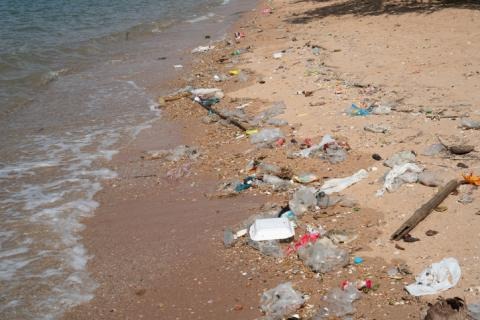
플라스틱, 세정제 등의 과도한 사용으로 인해 생태계가 손상되고 있다. ⓒ 게티이미지
어느 순간부터 하얀 거품의 물이 흐르더니 지금은 모두 자취를 감추고 말았다. 그 시기는 우리가 부드러운 화학공업의 혜택을 누리는 시기와 맞아떨어진다. 그렇다고 극단적으로 값싸고 부드러운 세정제들의 혜택을 포기하라고 설득하기는 쉽지 않을 것이지만 세정제 사용을 줄이기 위한 노력은 반드시 필요하다.
우리들이 다시 비누의 시대로 돌아갈 수 있다면 아름다운 생태계가 다시 우리 곁으로 돌아올 수 있을 지도 모른다. 생태계 교란의 원인이 단지 합성계면활성제의 문제만은 아니겠지만, 아마도 가장 중요한 요인 중의 하나임은 분명하다.
합성계면활성제의 인체 독성 문제에 대해서는 논란의 여지가 있지만, 독성은 예외로 하더라도 생분해가 잘 안되고 작은 생물들을 죽이는 것은 물론이고 거품이 수면을 뒤덮어 햇볕을 가리고 산소 공급을 방해하기 때문에 마을 주변 개천의 생태계에 큰 해악을 끼치는 것은 엄연한 사실이다.
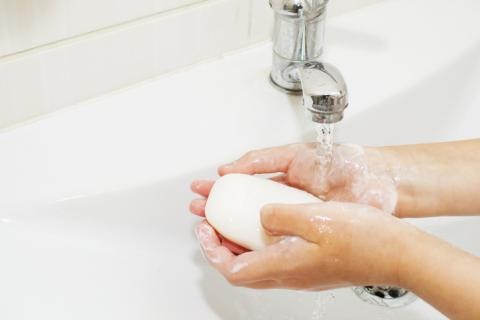
다시 비누의 시대로 돌아가기 위한 노력이 필요하다. ⓒ 게티이미지
다시 비누의 시대로 돌아가야 할 중요한 이유는 몇 가지가 더 있다.
첫째, 합성 계면활성제 대신에 식용 가능한 천연 오일(코코넛, 팜, 올리브 오일 등) 유래의 지방산염을 사용하므로 우리 몸에 거의 해가 없다 (바디버든 줄이기).
둘째, 합성계면활성제에 비해 지방산염은 상대적으로 생분해가 잘 되는 것으로 알려져 있고 강이나 하천의 생태계에 해가 거의 없다.
셋째, 고체이므로 액체에 비하여 방부제 없이 장기간 보관이 가능하다.
넷째, 고체이므로 플라스틱이나 비닐 같은 밀폐용기가 필요 없다.
다섯째, 비누 자체가 고밀도 농축물이므로 액체 세정제에 비하여 가볍고 부피도 작아서 유통 시 차량 이동에 필요한 에너지가 절감되며 대기오염도 줄인다. (불필요한 물/용매를 싣고 다니지 않아도 되기 때문)
최근 갑자기 플라스틱 문제가 전 세계적인 이슈로 등장했다. 우리나라는 부끄럽게도 일인당 플라스틱 소비가 최고 수준이라는 오명을 얻었다. 비누만 사용해도 매일 쏟아져 나오는 플라스틱 용기를 많이 줄일 수 있다. 우리의 편리한 생활방식을 한꺼번에 바꾸기란 쉽지 않겠지만 하나씩 바꾸어 나가야 할 때이다.
다시 비누의 시대를 열기 위해서는 그동안 왜 비누가 소비자들에게 외면받아 왔을지 생각해 봐야 한다. 비누는 대부분 알칼리성이어서 사용 후에는 피부가 땅기거나 상하는 느낌이 들기 때문이다.
불과 얼마 전까지만 하더라도 비누는 원래가 알칼리성이니 사용감이 거친 것은 어쩔 수 없는 일이라 생각했었다. 그러나 사실 비누화반응이 제대로 이루어져 잔류 수산화나트륨이 거의 없는 비누는 거칠거나 피부가 상한다는 느낌이 없고 매우 부드럽고 세정도 잘 된다.
즉 사람들이 세안이나 샤워에 비누를 주로 사용하기 위해서는 피부에 자극을 주는 강한 알칼리성 비누 대신에 세정효과는 좋으면서도 우리 피부에 순한 제대로 만든 비누들이 많이 나와야 한다.
근래 수제비누 열풍 속에서 누구나 쉽게 만들어 내는 비누는 외양을 특이하게 꾸민다거나 첨가하는 기능성 성분은 그럴듯하지만 대부분은 본질적인 비누화 반응이 제대로 이루어지지 않아 피부에 자극적이다.
비누는 쉬운 유기화학반응물이지만 비전문가가 누구나 쉽게 만들 수 있는 것이 아니다.
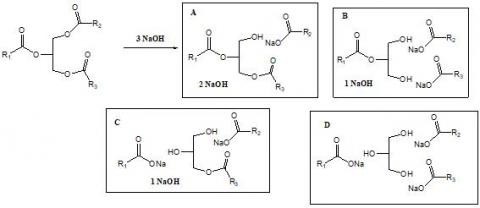
비누화 반응에서 4 종류의 생성물 세트 (A, B, C, D)가 생길 수 있다. 비누화 반응 (가수분해 반응)이 완결되어 거의 모두 D가 되면 제대로 된 순한 비누가 되지만, A, B, C (물에 잘 안 녹음)가 많이 섞이면, 수산화나트륨이 남아 거친 비누가 된다. ⓒ 전동주
비누화 반응은 교과서에 등장할 정도로 기초적인 화학반응이지만 수산화나트륨이 거의 남지 않도록 완벽하게 수행하는 일은 전문가에게도 쉬운 일은 아니다. 왜냐하면 한 분자 당 3 개씩이나 붙어있는 에스테르기의 가수분해반응이 한 번에 균일하게 반응이 진행되지 않으면 일부 반응물이 다른 반응을 방해하게 되어 이후 장시간 반응시켜도 미 반응 오일과 수산화나트륨이 많이 남게 되기 때문이다. 또한 반응 후 분자들의 배열이 제대로 이루어지지 않으면 쉽게 물러지거나 깨지는 비누가 만들어지기도 한다.
그러나 아쉽게도 비누에 대해서는 학문적인 연구를 수행한 것이 거의 없으며 업체마다 각자 비밀리에 노하우로써 전해 내려온 방법을 주로 사용해 오고 있으므로 알아내기도 어렵다. 또한 비누의 기본 물질인 지방산염의 화학적인 구조는 잘 알려져 있지만, 막상 그 분자들이 어떻게 배열되어 있는지에 대해서는 제대로 알려진 바가 없으며 알아내기도 쉽지는 않다.
우리 사회가 합성 세정제의 시대에서 비누의 시대로 되돌아가기 위해서는 비누를 사용하는 것이 우리의 건강과 생태계를 되살리는 데 매우 중요하다는 사실을 알리는 일과 병행하여, 누구나 기꺼이 사용할 수 있도록 피부에 순한 비누를 만드는 일도 중요하다.


Returning to the Age of Soap: Why Truly Saponified Soap Matters
Not many decades ago, a small stream near almost any Korean village was full of life — crucian carp and loach visible right at the surface, their scales flashing silver as they swam upstream on a rainy day.
At some point, white foam started appearing in that water. Not long after, the fish were gone.
That shift lined up almost exactly with the era when synthetic detergents became a fixture of daily life.
The Ecological Cost of Synthetic Surfactants
Asking people to give up cheap, convenient, skin-friendly-feeling detergents outright isn't realistic.
But reducing how much of them we use is worth taking seriously.
Whether synthetic surfactants pose a direct toxicity risk to the human body is still debated.
Toxicity aside, though, a few facts aren't in dispute: they biodegrade poorly, harm small aquatic organisms, and the foam they generate blankets the water's surface — blocking sunlight and cutting off oxygen exchange.
For the ecosystem of a small stream, that combination is genuinely damaging.
Five Reasons to Return to Soap
1. Lower body burden.
True soap is made from fatty acid salts derived from edible natural oils — coconut, palm, olive — rather than synthetic surfactants, so it poses little risk to the human body.
2. Better biodegradability.
Compared to synthetic surfactants, fatty acid salts are known to biodegrade far more readily, with minimal impact on river and stream ecosystems.
3. No preservatives needed.
As a solid, soap can be stored long-term without preservatives — something liquid cleansers can't claim.
4. No plastic packaging required.
A solid bar doesn't need a sealed plastic or vinyl container the way a liquid product does.
5. A smaller footprint in transport.
Soap is a dense, concentrated product. Compared to liquid cleansers — most of which are mostly water — it's lighter and takes up less volume, which means less fuel burned in distribution and less air pollution, simply because you're not shipping unnecessary water or solvent.
The Plastic Problem Nobody Wants to Own
Plastic waste has become a global concern almost overnight, and per-capita plastic consumption in Korea ranks uncomfortably high.
Switching to bar soap alone could meaningfully cut down on the plastic containers we throw away every day.
Changing an entire convenience-driven lifestyle overnight isn't realistic — but shifting habits one at a time is.
Why Soap Fell Out of Favor in the First Place
Reviving the age of soap means being honest about why consumers turned away from it.
Most soap is alkaline, and that alkalinity is what leaves skin feeling tight or irritated after use.
Until fairly recently, the assumption was simple: soap is inherently alkaline, so a rough, drying feel is just the price of using it.
That assumption is wrong. Soap in which the saponification reaction has actually gone to completion — leaving almost no residual sodium hydroxide — feels remarkably gentle and cleans effectively, without any of that harshness.
In other words, if soap is going to become people's everyday choice for washing their face or showering, what the market needs isn't just more alkaline soap — it needs properly made soap: soap that cleans well and is genuinely gentle on skin.
Why Most "Handmade" Soap Still Irritates Skin
Amid the current boom in handmade soap, a lot of what gets produced focuses on unusual appearances or trendy functional additives.
Most of it, however, hasn't actually completed the saponification reaction properly — and that's what makes it irritating.
Soap is, chemically speaking, a simple organic reaction. But that doesn't mean anyone without training can reliably make it well.
The Chemistry: Four Possible Outcomes of Saponification
A saponification (hydrolysis) reaction can, in principle, produce four distinct classes of product, which I'll label A, B, C, and D.
If the reaction goes to completion and nearly everything converts to D, you get a proper, mild soap.
If a significant fraction of the mixture remains as A, B, or C — none of which dissolve well in water — leftover sodium hydroxide stays behind, and the result is a harsh bar.
Saponification is basic enough to appear in a chemistry textbook, yet driving it to near-total completion — leaving essentially no residual NaOH — is genuinely difficult, even for someone trained in the field.
Here's why: each triglyceride molecule carries three ester groups that need to hydrolyze.
If that hydrolysis doesn't proceed uniformly across the batch, partially reacted material can interfere with the rest of the reaction.
Even with extended reaction time, you can end up with significant unreacted oil and residual NaOH still present. On top of that, if the resulting molecules don't arrange themselves properly as the soap solidifies, the bar can end up too soft or prone to cracking.
Unfortunately, very little rigorous academic research exists on soap chemistry specifically.
Most manufacturers rely on proprietary know-how passed down internally, which makes the underlying science hard to access from the outside.
The chemical structure of fatty acid salts — soap's core building block — is well understood, but exactly how those molecules arrange themselves within a bar of soap is still not well characterized, and figuring that out isn't straightforward.
What It Will Take
Bringing society back from the era of synthetic detergents to the era of soap requires two things happening together: raising awareness that soap use genuinely matters for human health and ecosystem recovery, and making sure the soap on the market is actually gentle enough that people are willing to use it every day.
Adapted from the original Korean-language column, "비누의 시대로 돌아가기 위해서는" (Returning to the Age of Soap),
published in ScienceTimes, September 16, 2019, by Dr. Dongju Jeon — then Senior Research Fellow at the Korea Research Institute of Chemical Technology,
now Director of R&D at Hwayeon Soap (hwayeon.co.kr) and Terry's Soap.
비누의 시대로 돌아가기 위해서는
[생활 속의 화학] 수산화나트륨 남지 않은 순한 비누 보편화돼야
2019.09.16 09:33 전동주 한국화학연구원 전문연구위원
불과 수십 년 전까지만 해도 시골마을의 집 바로 근처 개울까지 붕어들과 미꾸라지들이 올라오곤 했다. 비 오는 날이면 물풀로 가득한 작은 개울에서 물살을 거슬러 오르던 붕어의 검은 등과 헤엄칠 때마다 은빛으로 빛나는 비늘을 쉽사리 볼 수 있었다.
플라스틱, 세정제 등의 과도한 사용으로 인해 생태계가 손상되고 있다. ⓒ 게티이미지
어느 순간부터 하얀 거품의 물이 흐르더니 지금은 모두 자취를 감추고 말았다. 그 시기는 우리가 부드러운 화학공업의 혜택을 누리는 시기와 맞아떨어진다. 그렇다고 극단적으로 값싸고 부드러운 세정제들의 혜택을 포기하라고 설득하기는 쉽지 않을 것이지만 세정제 사용을 줄이기 위한 노력은 반드시 필요하다.
우리들이 다시 비누의 시대로 돌아갈 수 있다면 아름다운 생태계가 다시 우리 곁으로 돌아올 수 있을 지도 모른다. 생태계 교란의 원인이 단지 합성계면활성제의 문제만은 아니겠지만, 아마도 가장 중요한 요인 중의 하나임은 분명하다.
합성계면활성제의 인체 독성 문제에 대해서는 논란의 여지가 있지만, 독성은 예외로 하더라도 생분해가 잘 안되고 작은 생물들을 죽이는 것은 물론이고 거품이 수면을 뒤덮어 햇볕을 가리고 산소 공급을 방해하기 때문에 마을 주변 개천의 생태계에 큰 해악을 끼치는 것은 엄연한 사실이다.
다시 비누의 시대로 돌아가기 위한 노력이 필요하다. ⓒ 게티이미지
다시 비누의 시대로 돌아가야 할 중요한 이유는 몇 가지가 더 있다.
첫째, 합성 계면활성제 대신에 식용 가능한 천연 오일(코코넛, 팜, 올리브 오일 등) 유래의 지방산염을 사용하므로 우리 몸에 거의 해가 없다 (바디버든 줄이기).
둘째, 합성계면활성제에 비해 지방산염은 상대적으로 생분해가 잘 되는 것으로 알려져 있고 강이나 하천의 생태계에 해가 거의 없다.
셋째, 고체이므로 액체에 비하여 방부제 없이 장기간 보관이 가능하다.
넷째, 고체이므로 플라스틱이나 비닐 같은 밀폐용기가 필요 없다.
다섯째, 비누 자체가 고밀도 농축물이므로 액체 세정제에 비하여 가볍고 부피도 작아서 유통 시 차량 이동에 필요한 에너지가 절감되며 대기오염도 줄인다. (불필요한 물/용매를 싣고 다니지 않아도 되기 때문)
최근 갑자기 플라스틱 문제가 전 세계적인 이슈로 등장했다. 우리나라는 부끄럽게도 일인당 플라스틱 소비가 최고 수준이라는 오명을 얻었다. 비누만 사용해도 매일 쏟아져 나오는 플라스틱 용기를 많이 줄일 수 있다. 우리의 편리한 생활방식을 한꺼번에 바꾸기란 쉽지 않겠지만 하나씩 바꾸어 나가야 할 때이다.
다시 비누의 시대를 열기 위해서는 그동안 왜 비누가 소비자들에게 외면받아 왔을지 생각해 봐야 한다. 비누는 대부분 알칼리성이어서 사용 후에는 피부가 땅기거나 상하는 느낌이 들기 때문이다.
불과 얼마 전까지만 하더라도 비누는 원래가 알칼리성이니 사용감이 거친 것은 어쩔 수 없는 일이라 생각했었다. 그러나 사실 비누화반응이 제대로 이루어져 잔류 수산화나트륨이 거의 없는 비누는 거칠거나 피부가 상한다는 느낌이 없고 매우 부드럽고 세정도 잘 된다.
즉 사람들이 세안이나 샤워에 비누를 주로 사용하기 위해서는 피부에 자극을 주는 강한 알칼리성 비누 대신에 세정효과는 좋으면서도 우리 피부에 순한 제대로 만든 비누들이 많이 나와야 한다.
근래 수제비누 열풍 속에서 누구나 쉽게 만들어 내는 비누는 외양을 특이하게 꾸민다거나 첨가하는 기능성 성분은 그럴듯하지만 대부분은 본질적인 비누화 반응이 제대로 이루어지지 않아 피부에 자극적이다.
비누는 쉬운 유기화학반응물이지만 비전문가가 누구나 쉽게 만들 수 있는 것이 아니다.
비누화 반응에서 4 종류의 생성물 세트 (A, B, C, D)가 생길 수 있다. 비누화 반응 (가수분해 반응)이 완결되어 거의 모두 D가 되면 제대로 된 순한 비누가 되지만, A, B, C (물에 잘 안 녹음)가 많이 섞이면, 수산화나트륨이 남아 거친 비누가 된다. ⓒ 전동주
비누화 반응은 교과서에 등장할 정도로 기초적인 화학반응이지만 수산화나트륨이 거의 남지 않도록 완벽하게 수행하는 일은 전문가에게도 쉬운 일은 아니다. 왜냐하면 한 분자 당 3 개씩이나 붙어있는 에스테르기의 가수분해반응이 한 번에 균일하게 반응이 진행되지 않으면 일부 반응물이 다른 반응을 방해하게 되어 이후 장시간 반응시켜도 미 반응 오일과 수산화나트륨이 많이 남게 되기 때문이다. 또한 반응 후 분자들의 배열이 제대로 이루어지지 않으면 쉽게 물러지거나 깨지는 비누가 만들어지기도 한다.
그러나 아쉽게도 비누에 대해서는 학문적인 연구를 수행한 것이 거의 없으며 업체마다 각자 비밀리에 노하우로써 전해 내려온 방법을 주로 사용해 오고 있으므로 알아내기도 어렵다. 또한 비누의 기본 물질인 지방산염의 화학적인 구조는 잘 알려져 있지만, 막상 그 분자들이 어떻게 배열되어 있는지에 대해서는 제대로 알려진 바가 없으며 알아내기도 쉽지는 않다.
우리 사회가 합성 세정제의 시대에서 비누의 시대로 되돌아가기 위해서는 비누를 사용하는 것이 우리의 건강과 생태계를 되살리는 데 매우 중요하다는 사실을 알리는 일과 병행하여, 누구나 기꺼이 사용할 수 있도록 피부에 순한 비누를 만드는 일도 중요하다.